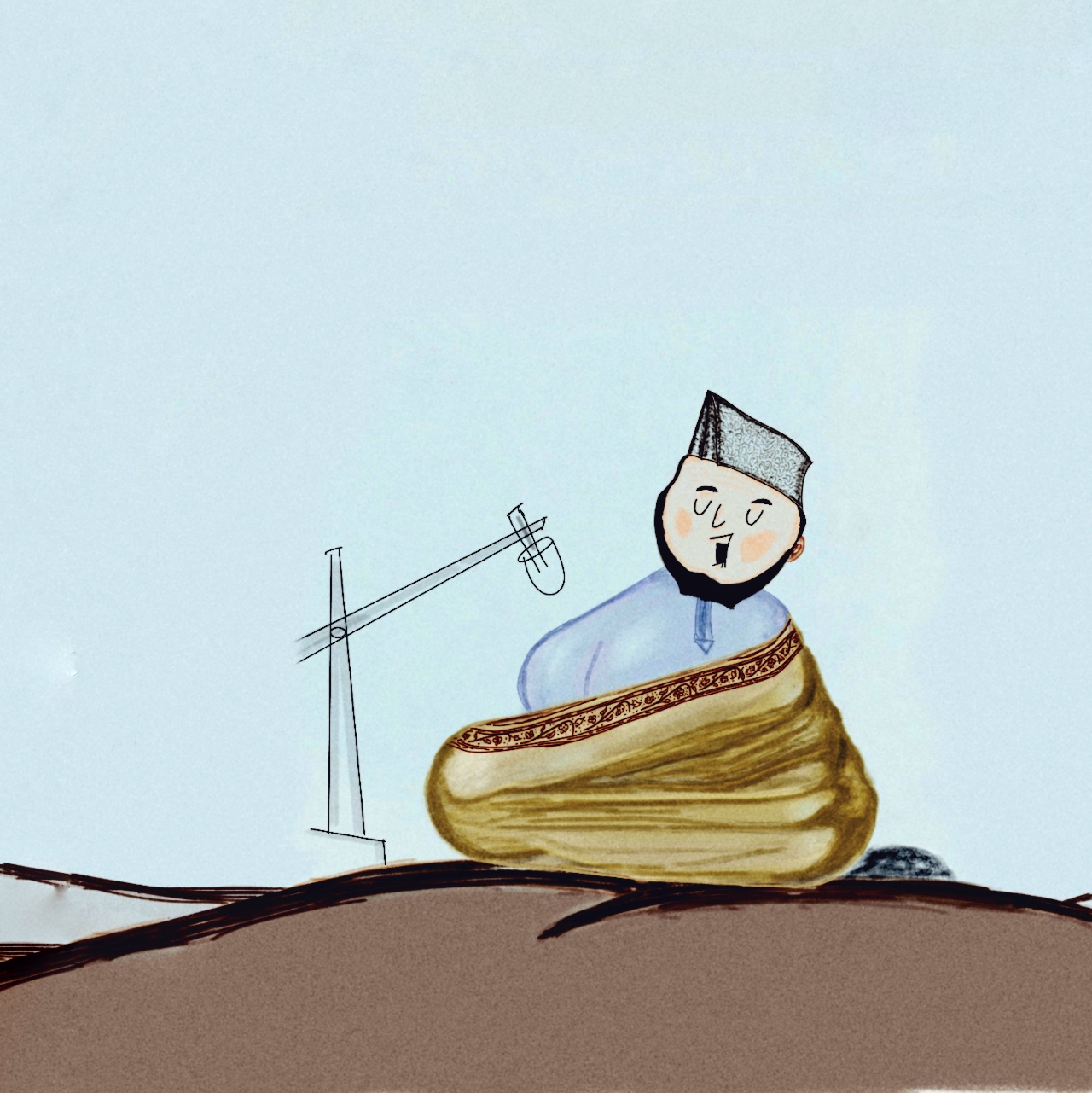
I - The Burial of Truth
When a civilisation buries Truth, its ‘tolerance’ is a polite nihilism. Allah declares, ‘Truth has arrived and falsehood has vanished; surely falsehood is ever bound to perish’ (17:81). The modern call for tolerance is not rooted in truth, but in exhaustion from conflict. It is not a principled virtue but a negotiated peace imposed by secular elites in a world where meaning has decayed. Yet true tolerance, in the Qur’anic and Prophetic tradition, is not born of relativism, it is born of reverence, reverence for truth, and thus for the human capacity to seek it. Without such a shared metaphysical ground, the language of tolerance collapses into hypocrisy: either cowardice masked as open-mindedness, or indifference cloaked as civility.
The Islamic tradition locates the human capacity for tolerance in fitrah, the primordial nature infused by God, which inclines toward truth (al-ḥaqq), balance (mīzān), and justice (ʿadl). The Prophet ﷺ tolerated the disbelief and insult of Quraysh not because he relativized truth, but because he was unwaveringly sure of it. Tolerance was not an epistemic uncertainty but a strategic mercy. “And We have not sent you but as a mercy to all the worlds” (Qur’an 21:107). Mercy presumes a truth worthy of patience, not a nihilism wrapped in etiquette. Thus, only when truth is held as transcendent, as metaphysically prior to human opinion, can disagreement be endured with dignity.
Modern secularism has evacuated the sacred from public consciousness, leaving a marketplace of competing preferences. Charles Taylor calls this condition the “immanent frame,” a social imaginary that locks the modern self inside a “buffered” enclosure where transcendence is merely one optional interpretation and every conviction therefore becomes fragile. Skepticism, once employed against dogma, is now dogma itself. It has stripped man of metaphysical certainty and replaced it with “critical thinking”, a euphemism for endless doubt. Such skepticism is not neutral, both spirit and material should have gone, but material entered through the back gate taking advantage of man's inherent proclivity towards pleasure. Alasdair MacIntyre shows that in such an emotivist culture moral claims collapse into declarations of personal preference, so public argument decays into manipulative bargaining rather than rational deliberation. In such a world, to proclaim that a view is true is considered oppressive, even dangerous. But to deny all truths is to deny the very foundation upon which tolerance is to be built.
The tolerance borne out of such skepticism isn’t neutral either. It is a weaponized relativism that permits everything except truth. When Australian Catholic University invited a keynote speaker who defended Catholic teaching on abortion and marriage, hundreds of graduates and staff staged a mass walk-out and the university later offered refunds and counselling, effectively penalising its own creed. In the United States, a Virginia realtor now faces losing his professional licence because he shared Leviticus 18:22 on Facebook nine years ago, the verse having been reclassified as “hate speech” by his association’s ethics panel. Across the Atlantic, France is pushing a bill that would bar hijab-wearing athletes from every national sporting competition, extending head-scarf bans from classrooms to stadiums in the name of “neutrality.” Universities preach “diversity,” but de-platform any metaphysical conviction. Social media calls for “inclusivity,” but erases dissent from secular orthodoxy. The liberal state tolerates every identity except that which identifies with revelation. This is not tolerance, but totalitarianism.
When public space is policed in this way, the damage is not confined to policies; it seeps into how people even speak to one another. Once conviction is rebranded as aggression, the very etiquette of disagreement begins to fray. The doubting attitude leads inexorably to the questioning attitude, and its most visible social symptom is the loss of adab, the moral grammar that orders speech and listening. Once that grammar erodes, dispute mutates into performance: dialogue becomes shouting, debate collapses into de-construction. Classical Muslim logicians understood this so well that they wrote entire manuals, Adab al-Baḥth wa’l-Munāẓara, insisting that anyone who enters a debate must first master logic, rhetoric and the courtesies that restrain ego while truth is sought.
In 2019 Cambridge University rescinded a visiting fellowship for Jordan Peterson after student protests, announcing that an institution devoted to free inquiry had “no place” for views deemed offensive. The episode was not an isolated lapse in courtesy or tolerance; it revealed the disappearance of a transcendent reference-point against which ideas can be tested without anathematising the speaker.
Adab is not mere etiquette; it is an ascetic discipline of the tongue grounded in awareness that every word is recorded (Q 50:18). Without that vertical accountability to al-Ḥaqq civility floats on sentiment and is swept away by the first algorithm-fed outrage. Rooted in transcendence, however, adab liberates disagreement: Imam al-Shāfiʿī could pray that “God place the truth on my opponent’s tongue” because he understood himself as servant of a reality larger than his own pride. Tolerance needs more than rules of engagement; it needs souls schooled in adab, and adab itself flourishes only where Truth is acknowledged as higher than the self. Where that acknowledgment fades, no amount of campus speech-codes or “community guidelines” will keep the shouting from drowning out the search for meaning.
History furnishes living proof of that principle. In traditional Islamic societies, especially in Kashmiri culture, tolerance is not a modern liberal import. It is the fruit of a civilizational confidence grounded in Divine Truth. A society ordered around revelation can afford patience, because it is anchored. It sees the human being as a seeker, not a consumer. It sees disagreement as part of divine trial, not as a threat to identity. But once this metaphysical root is severed, culture becomes sentiment, and religion becomes therapy. Now tolerance becomes a shallow performance, a UNESCO slogan, incapable of withstanding real conflict. Consider three recent snapshots. Dubai’s pastel-lit World Tolerance Summit (2019) praised Emirati “openness” while the same government kept activists like Ahmed Mansoor in solitary confinement. Five years later the UAE marketed COP28 under the banner of coexistence even as courts handed life-sentences to forty-four dissidents in a single mass trial. In the West, Target’s much-advertised Pride collection was yanked off front shelves after threats from both left and right - exposing “inclusivity” as a branding exercise that collapsed under minimal pressure. The pattern is predictable. Philip Rieff saw it six decades ago: “Religious man was born to be saved; psychological man is born to be pleased” for religious man lives for salvation, but modern ‘psychological man’ lives for self-gratification. A culture of pleasure can bankroll slogans, but it cannot absorb real disagreement. Lacking transcendence, its tolerance is stage-prop thin, cheerful until conviction enters the room.
The Quran, on the other hand, does not preach tolerance as mere coexistence but as principled endurance: “To you your religion, and to me mine” (Qur’an 109:6). This is not relativism, this is metaphysical certainty spoken with courtesy. Only in a society where such metaphysical certainty is shared can tolerance gain depth. If truth is relative, shifting, or merely a matter of taste, then what foundation remains to tolerate the other except convenience or power? When truth is reduced to opinion, tolerance becomes a market contract, I stomach your view today so you will stomach mine tomorrow. But if Truth is ontologically grounded, al-Ḥaqq that upholds every atom, then tolerance is something higher: a reverent humility before the limits of one’s own seeing.
That is exactly the burden the Qurʾān lays upon the believer: “Call to the path of your Lord with wisdom (ḥikmah) and beautiful exhortation (mawʿiẓah ḥasanah), and debate with them in the best manner” (Q 16:125). Listening to the other is not an endorsement of every view; it is the disciplined courtesy required of those who witness to Truth. There is, therefore, no room for coercive silence—nor for the laissez-faire relativism of liberal myth. True tolerance stands, like an arch, only where its keystone is transcendental Truth.
Modernist Liberal “Intellectual’s” Fraudulent Tolerance
The liberal order claims to be tolerant by virtue of neutrality. But this neutrality is a lie. It tolerates all views, except those that claim truth. Hence, liberal tolerance is structurally allergic to Islam because Islam dares to proclaim la ilaha illallah not as opinion, but as ontological fact. It does not tolerate Islam as a truth-claim, only as a private feeling. The moment Islam exits the mosque and enters the world, in dress, law, education, or gender roles, tolerance evaporates, and coercion begins. A subtler tragedy unfolds among the self-styled “tolerant” modernist Muslims who applaud this arrangement. Because they have quietly relocated truth from heaven to the private psyche, their civility is less an Islamic virtue than a polite agnosticism.
Philosophically, this is a species of soft atheism, what Alasdair MacIntyre calls the “emotivist” stance, where moral and metaphysical claims “express nothing more than preference.” If revelation is reduced to preference, then asking society to tolerate Islam is indistinguishable from asking it to tolerate a new cuisine. The modernist Muslim therefore finds himself praising liberal neutrality precisely because he no longer believes a violation of Tawhid is metaphysically devastating; his tolerance exposes the eclipse of yaqīn within.
Classical kalām anticipated the flaw, to affirm God only as concept is to deny Him in reality, for the intellect must assent to truth that commands rather than one that merely comforts. Claims like “God exists, created you, and will hold you accountable” are actually telling the intellect “This is how reality is; therefore act accordingly - worship, obey moral law, seek justice”. They impose a duty because, if true, ignoring them collides with the way the universe is structured. For the modernist Muslim it is not such, for him it is something like “I believe in a higher power because it gives me peace”. It may soothe his anxiety, but it doesn’t require him to change anything beyond personal preference. If tomorrow that feeling fades, nothing in the fabric of reality seems violated. By this standard the tolerant modernist, however devout in ritual, has surrendered Islam’s epistemic claim and now bargains for a seat at the multicultural table on purely secular terms. He is tolerated because he has agreed to disarm the very sword of truth that once freed him.
This personal disarmament is no isolated lapse; it mirrors a civilisational swap. Where revelation is pushed into the private psyche, the public square does not become neutral, it simply baptises a new orthodoxy. Thus, the liberal world has not eradicated dogma — it has only replaced Christian dogma with secular dogma. The new heretic is not the blasphemer but the believer. And the new tolerance is not the patience of conviction, but the indifference of despair. The modern secular order bases its tolerance on the death of absolutes. Rooted in Cartesian skepticism and Enlightenment individualism, truth becomes subjective, and values become provisional. This is not an accident but a philosophical strategy: Skepticism leads to denial of objects, essences, and universals, and once that happens, all religion and tradition goes.
Put plainly, “the death of absolutes” means we have traded a fixed North-Star view of reality, for a world where every person carries a private compass that spins to suit the moment. When philosophers deny that things possess stable essences, that a marriage is anything in particular, that human nature has a telos, that good and evil refer to real qualities, public life drifts into what Oxford Dictionaries dubbed the post-truth era (they even made “post-truth” their 2016 Word of the Year). The term describes a climate in which objective facts are less influential in shaping public opinion than appeals to emotion and personal belief.
You can watch the logic play out clearly. Take the example of identity, a generation ago “man” and “woman” named biological realities; now they are treated as moods one can select or abandon. Polls on euthanasia or adultery shift almost in real time with Netflix story-lines, because right and wrong are no longer anchored to anything outside collective feeling. Surveys find that a growing share of worshippers choose their congregation the way they choose streaming services, does it “feel good” and “fit me”? Whether the creed is true is rarely asked and it cannot even be because the tools that make such enquiry possible are missing.
Under such conditions “tolerance” is reduced to customer service: I won’t challenge your choice if you don’t challenge mine. But the moment a faith insists that its claims describe how things actually are, that human beings are more than self-invented identities, that moral law is objective, post-truth tolerance snaps, and coercion (legal, social, or economic) moves in to silence the “absolutist.”
This trajectory is clear in the intellectual history of the West. Descartes began with doubt; Hume dismantled causality; Nietzsche declared God dead. What remained was a moral void, quickly filled by consumerism, hedonism, and identity politics. Without truth as a shared metaphysical reference, society substitutes consensus, sentiment, or raw power. Liberal tolerance becomes a Trojan horse for ideological coercion. This philosophical shift is not abstract, it has civilizational consequences, for, if the cognitive structures change, all the meaning is lost. Culture, which once functioned as the embodiment of truth in lived form, in rituals, language, family, becomes the first casualty. Religion survives only as private sentiment, and even that is steadily deconstructed.
The Muslim world has not escaped this process. Under colonialism, Islamic educational institutions were replaced by secular ones. Under capitalism, Islamic values were reduced to slogans. And under the regime of “progress,” family structures, gender norms, and communal ethics are being dismantled. Without culture to preserve religious memory, religion becomes a naked text, and the people, illiterate in its language. This cultural decapitation leaves Muslims disarmed before modern ideologies like feminism, liberalism, and postmodernism, all of which demand “tolerance,” but define it as submission to secular norms. Thus, the erosion of truth is not just an intellectual problem, it is an existential one.
What that means is that when the very idea of an objective Truth is stripped away in the name of tolerance, the loss is not confined to lecture halls, it reaches into the bedroom at 2 a.m. and asks, Why get up tomorrow? Without an external reference point, identity turns fluid, purpose dissolves, and community contracts. Psychologists now speak of a “meaning crisis” behind the spike in anxiety, self-harm, and substance abuse: 90 % of Americans say the nation faces a mental-health emergency, a trend public-health analysts link to vanishing sources of shared purpose.
You can watch the vacuum surface in everyday culture. Teenagers binge TikTok “day-in-my-life” clips because they no longer inherit a narrative of what a life is for. Couples delay marriage not only for economics but because, absent stable definitions of family, commitment feels arbitrary. Even politics becomes a carousel of identities; allegiance shifts with hashtags because there is no thicker story to bind citizens together. That is why the erosion of Truth is existential: it eats away at the human need for meaning, belonging, and a goal larger than appetite. A society may survive confusion in its universities, but it cannot survive confusion in its cure for despair.
Moreover, in such a context, Islam at the global arena, and traditionalist Islam within the Islamic world, because they claim truth, are seen not as one view among many, but as a threat. Modern secular regimes and “tolerant liberal modern” Muslims will applaud Islam as private meditation yet recoil the moment it walks into public life, in family law, finance, dress, or curriculum, exposing the brittle edge of liberal “tolerance.” Friday sermons on mindfulness are welcome; a modern education graduate speaking about mental well-being is applauded, but khutbahs that mention hudood, gender hierarchy, or moral limits trigger calls for reform. The pattern is identical, when Tunisia’s parliament debated re-criminalising public blasphemy, the loudest opposition came not from secularists but from Muslim commentators who warned that such laws would “tarnish the image of a modern Islam.” In Turkey, university students who defend separate prayer spaces on campus are derided by Muslim classmates as “backwards,” a disruption of the republic’s inclusive brand. Malaysia’s Sisters-in-Islam campaign to rewrite family law under “gender-equal Qurʾānic readings,” framing classical fiqh as a relic incompatible with global citizenship. Kashmir’s Women’s Collective campaign to amend Nikahnama to get divorce liberalised.
II - Truth and Tolerance
In modern liberal discourse, “truth” is privatized, something internal, psychological, subjective. But in our tradition, Truth (al-Ḥaqq) is ontological. It is the foundation of existence, the source of all being. This Truth is not up for democratic vote or social negotiation. It is disclosed through revelation, witnessed in creation, and known through fitrah and ‘aql. Far from abolishing tolerance, this certitude re-creates it on firmer soil. People differ, not because truth is relative, but because each stands at a unique distance from the One Reality. The Qurʾān therefore orders, “Call to the path of your Lord with wisdom (ḥikmah) and beautiful exhortation, and debate in the best manner” (16:125). The verse presumes Truth is real—yet it also demands patience, skill, and humility in conveying it. Guidance belongs to God alone; our task is tablīgh, never coercion. That, in brief, is the Qurʾānic architecture of tolerance: unshakable certainty about al-Ḥaqq coupled with disciplined mercy toward those still making their way to it.
Yet strip tolerance of a transcendent criterion and it soon devours itself. In secular regimes, “tolerance” is framed as the celebration of difference. But what if some differences are corrosive, denying the sacred, mocking the Prophet (saw), trivializing gender or family? Without a higher criterion (ḥaqq vs bāṭil), what determines what must be tolerated and what must not? With no axis of ḥaqq vs bāṭil to decide which differences ennoble and which degrade, the arbiters are mood, market, and media outrage. Consequently “tolerance” whipsaws between two pathologies: tyranny, where cancel-culture tribunals silence whatever offends the zeitgeist, and nihilism, where anything goes because nothing is acknowledged to be true. Either way, the public square becomes unlivable, first for those who still honour revelation, and eventually for everyone who longs for meaning beyond applause.
By contrast, a society moored to al-Ḥaqq can afford a patience that is neither indifferent nor punitive. Because truth is secure, it need not be shouted down nor locked away; errors are met with rahmah and ḥikmah, the hope that souls will circle back to what is right. Recall the Prophet ﷺ at Ta’if: pelted with stones, he refused retaliation and prayed that the very children of his tormentors might one day recognise the One God. Truth was never suspended, his certainty was absolute, but its expression was adjusted to the moment’s capacity. Such tolerance is not a truce with falsehood; it is mercy extended from the confidence that falsehood is, by nature, temporary and that hearts can still return to the Real.
In sharp contrast to Islam’s principled forbearance, modern secular societies cannot even manufacture real tolerance. This is because they lack a shared metaphysical grammar, their “truth” is market-driven, not divinely rooted and that they tolerate only what conforms to their idol of the moment: individual autonomy, sexual libertinism, etc. What they call tolerance is actually strategic permissiveness, until the cultural tide shifts and the dominant view becomes oppressive. Take, for example, the already cited three recent headlines that illustrate how “strategic permissiveness” flips to repression the moment a new idol is threatened. France celebrating women clothing choices until she chooses Hijab. Cambridge University celebrating “diversity of thought” until students protest psychologist Jordan Peterson. U.S. retailer Target halved the number of stores carrying Pride merchandise after a single season of backlash, proving corporate “inclusion” survives only while it helps the bottom line. Each case shows the same pattern: secular tolerance lasts only while dissent remains fashionable or profitable; once the cultural wind shifts, the dominant view turns coercive.
So if secular “tolerance” is this flimsy, collapsing into bans, cancellations, or price-tag reversals whenever the cultural wind shifts, why don’t more people see through the charade and reach back for anchoring Truth? Because the modern soul now lives inside a fortress expressly built to keep Truth out. Four systemic barricades form its walls, each higher than the last. First, the Architecture of Falsehood, Media, Curriculum, and Culture. Our epistemic environment is no longer neutral. It is saturated, engineered, to numb the soul to metaphysical truth. Media does not just distract; it narrates a world without God, where meaning is consumption and purpose is pleasure. Curriculum teaches history without Providence, biology without soul, ethics without Heaven. Culture no longer transmits virtue but simulates it through aesthetics, “wokeness,” “mental health awareness,” or Insta-mysticism. Even if a seeker arises, he finds no trail, no visible signs to orient toward al-Ḥaqq.
The curriculum that is lauded is such that a child may recite multiplication tables, but not Allāhu akbar. Open Instagram’s #self-care tag, the dominant pitch is “treat yourself” consumerism. Teen Vogue recently warned that such influencer-driven over-consumption activates the brain’s reward pathways “much like drugs,” fuelling anxiety and emptiness rather than meaning. A 2024 study on Netflix’s global Top-10 lists shows religious or metaphysical themes all but absent; the most-watched plots orbit romance, sexual romance, soft pornography, revenge, or luxury lifestyles, reinforcing a universe where pleasure is the only telos. Taken together, school, screen, and scroll feed the modern seeker a single story: there is nothing beyond the material, and fulfillment is found in consumption or credentials. Little wonder, then, that even a heart stirred toward Truth finds no visible trail amid the neon signs.
Second, the Erosion of Meaningful Authority. Traditionally, Truth was mediated by, the ʿālim (scholar), who connected the Book to the world, the shaykh (spiritual guide), who connected the soul to the unseen, the elder, who connected the young to tradition. All three are now mocked or made irrelevant. These are replaced by, celebrity preachers with fragmented knowledge, technocrats with data but no wisdom, and youth-led “movements” drunk on identity but starved of metaphysics. A generation rises without guides. The clearest example showcasing the phenomenon is the death of the father. In popular culture “patriarchy” is cast as the root of all oppression; second-wave feminism and its heirs treat fatherhood not as stewardship but as systemic threat. To modern ears the phrase sounds Freudian, but our tradition knew the danger long before Freud: al-ab is the first human symbol of responsibility, hierarchy, and transmission. When the father-figure, biological or spiritual, is dethroned, the child is liberated only to drift. A generation rises without guides – orphaned.
That orphanhood sustains itself with the poison of levelling. With no recognised scale of rank, scholar over novice, elder over youth, revelation over opinion, every claim appears as valid as every other and is settled by volume, clicks, or ridicule. Kierkegaard warned that a society ruled by “the public” flattens all excellence until “one sheep begins to resemble the other.” Social media perfects the process: an unlettered meme can veto a mufassir’s tafsīr in seconds, and algorithmic applause becomes the new ijmāʿ. But a civilisation that cannot tell mountain from molehill, saint from influencer, or timeless principle from passing slogan is condemned to wander a level plain - wide, yes, but utterly without direction.
Third, the Rewiring of the Self. This is perhaps the most lethal. Through minuscule injections, modern man has been reprogrammed, he values choice over truth, he trusts feelings over revelation and evidence, he demands utility over meaning. Even the most sincere seeker, if formed in such waters, begins to treat truth not as a reality to submit to, but a tool to use or a vibe to feel. Thus, the tools for truth-recognition, ḥayā’, adab, tawādhuʿ, are removed from his conceptual vocabulary.
What this means in practice is that the moral gyroscope breaks. If an action feels authentic it is judged good; if a belief boosts social capital it is dubbed “true.” Hence, the rise of “My truth” culture. Talk-show guests and TikTok influencers preface every confession with “my truth,” signalling that any challenge would be an assault on personal identity.Campus activists label opposing ideas as “trauma” and demand “safe spaces”, turning disagreement into psychological injury and foreclosing rational debate. (Notice such “Safe spaces” are spaces intolerant to differing ideas).When truth is reduced to mood or market value, the very capacity to recognise Truth withers. Man is left with a thousand customizable options, but no compass capable of pointing beyond himself.
Fourth, the fragmentation of Culture and Family. Tradition is not preserved by books, but by homes. The extended family transmitted adab, ritual, story, hierarchy, discipline. It made the invisible God visible through patterns of life. Its destruction has left a man unmoored, raised by algorithms, mentored by actors, comforted by pornography. Without a cultural grammar, he cannot even recognize truth when it stands before him, let alone defend it.
Taken together, these four walls, falsehood’s architecture, fatherless authority, the rewired self, and the shattered hearth, form a citadel that keeps the modern soul in polite captivity. Within it, truth sounds like nostalgia and tolerance withers into strategy. Until those barricades crack, every call to “open-mindedness” will remain a slogan sold by the very forces that sealed us in. We must move towards a true revival, restoring the conditions of real tolerance. This is crucial. A love of truth is not natural in societies shaped by skepticism and consumerism. It must be cultivated through, revival of fitrah by realigning our desires and intellect toward the transcendent, reinstitution of traditional education, logic, grammar, tafsīr, ʿaqīdah, not for clerical training only, but to train the soul to recognize haqq from bāṭil, sacralizing speech, making sacred speech, not slogans, the center of our discourse, re-embedding family and culture as transmitters of meaning, not just tradition for tradition’s sake.
III - The Solution
Four pillars must emerge to break the four walls mentioned earlier. First, Resacralize the Purpose of Life. Modern man doesn’t just disagree with Truth, he doesn’t even see it, because his horizon is too low. His telos is productivity, not proximity to God. We must reintroduce purpose as the spine of all discourse, that man is created to know and worship his Lord, that knowledge is for transformation, not credentialism, that death is not interruption, but arrival. This requires that we re-sacralize language, this requires restoring terms like taqwā, sabr, yaqīn, adab, ḥayā’ to their rightful glory. This necessitates Quranic verses, Hadith and anecdotes from the Awlia form part of regular discourse – in classrooms, in tweets, in academic papers.
Second, rebuild the family as an epistemic unit. The extended family is not nostalgia, it is a transmitter of meaning. We must, re-anchor family in worship, turn homes into madrasah and zāwiyah. We must restore hierarchy and roles, not to dominate, but to transmit. A father who commands love and a mother who breathes barakah. This must be supported by a shield from media poison, what enters the child’s eye enters his qalb. Practice media fasting as a family discipline. This family becomes the first maqām of Truth-recognition. Scripture praises the household as the first classroom, “Guard yourselves and your families from a Fire” (66:6). Rebuilding of family is not possible without “deorphaning” the orphan and that is by reviving the “father”. The Qurʾān names the father’s mantle with a single, vigorous word: qawwāmūn - “Men are qawwāmūn over their families” (4:34). This is very interesting for the simple fact that a nation (qawm) is how its fathers “qawwamun” are. The Arabic makes the verdict brutally clear. Qawwām (the man who stands over his household) and qawm (the nation) share the same spine - q-w-m, “to stand.” Break the spine in the home and the body of the ummah crumples outside. Put bluntly: kill the father (qawwam), kill the nation (qawm); revive the father (qawwam), revive the nation (qawm). Until the qawwām stands upright again, guarding, teaching, providing, the qawm will keep crawling in circles, leaderless and uncertain.
Classical exegetes unpack the role of father as ḥāris (guardian), muʾaddib (moral instructor), and munfiq (provider). Qawwām are “upholders and steerers” just as captains keep a vessel on course, and the role exists such so that the dīn may be preserved in the private domain before it is preached in the public one. In other words, the father is charged with maintaining the first micro-civilisation where children learn who God is and what truth demands. Remove that pillar and the roof of meaning sags: discipline becomes optional, worship drifts, and moral learning is outsourced to screens and peer groups – din goes, medina goes. So when modern social science highlights the developmental benefits of an engaged father, it is merely confirming what the Qurʾānic concept of qawwāmiyyah encoded all along, that the family’s epistemic strength rests on a responsible, guiding presence who “stands over” the household to ensure that Truth is both taught and lived.
Third, restore traditional knowledge systems. Truth cannot be loved if it is not known. But knowing is not information, it is kashf, unveiling. We need centers of traditional learning rooted in ʿulūm al-naql (revelation) and supported by ʿulūm al-ʿaql (logic, grammar, philosophy), resting on the shoulders of teachers who are rabbānīyūn, who form the soul, not just test it. From such centres and such teachers must emerge a public discourse that esteems ḥikmah over “hot takes.” This is why we call not for “Islamic universities,” but for maqāsid-guided civilizations.
Fourth, rebirth of culture as carrier of the sacred. Culture is not fluff. It is the flesh in which the soul of religion is clothed. We must revive sacred aesthetics, calligraphy, architecture, adab in speech, dhikr echoed loudly as in khatm-e-shareef. We must reject global pop culture mysticism that reduces God to a hashtag, this can be done by reviving lost art forms and composing new ones rooted in tawhid, adab, and adl: Not kitsch “Islamic rap” but haunting Kashmiri naats that bring tears. A people must see and smell the sacred, not just argue for it.
That being said, no revival is possible without men and women of yaqīn, those who live the truth they speak of. These are the inheritors of prophets. They will suffer. They will be mocked. But they will sow seeds in a burnt field, waiting for God to send the rain. The revival of true tolerance, then, begins not with interfaith summits or multicultural pageants, but with the restoration of truth as a lived and believed category. The crisis is not religion’s absence but the death of religious sciences. It is not just the Qur’an that must be revived, it is the grammar by which we understand it, the logic by which we defend it, the adab by which we embody it. The task is not to make Islam more tolerant, but to make Muslims more anchored. Only then will they embody the magnanimity that real truth engenders.
In the final analysis, modern Muslims must understand that tolerance is not a modern invention - it is a metaphysical fruit of their own civilizational seeds. They must recognize that it grows only where truth is honored, and where man is seen not as a bundle of rights, but as a bearer of duty. The Prophet ﷺ showed us what it means to tolerate without compromising. Our tradition teaches us how to differ without demeaning. But if we continue to hollow out truth, we will hollow out tolerance with it. And what remains will not be peace, but an abyss. Tolerance without truth is cowardice. Truth without tolerance is tyranny. But truth with tolerance, the Prophetic balance, is daʿwah. It is mercy without compromise. Only a civilization confident in its truth can afford to tolerate others. And only a civilisation sure of its Lord can afford such magnanimity.