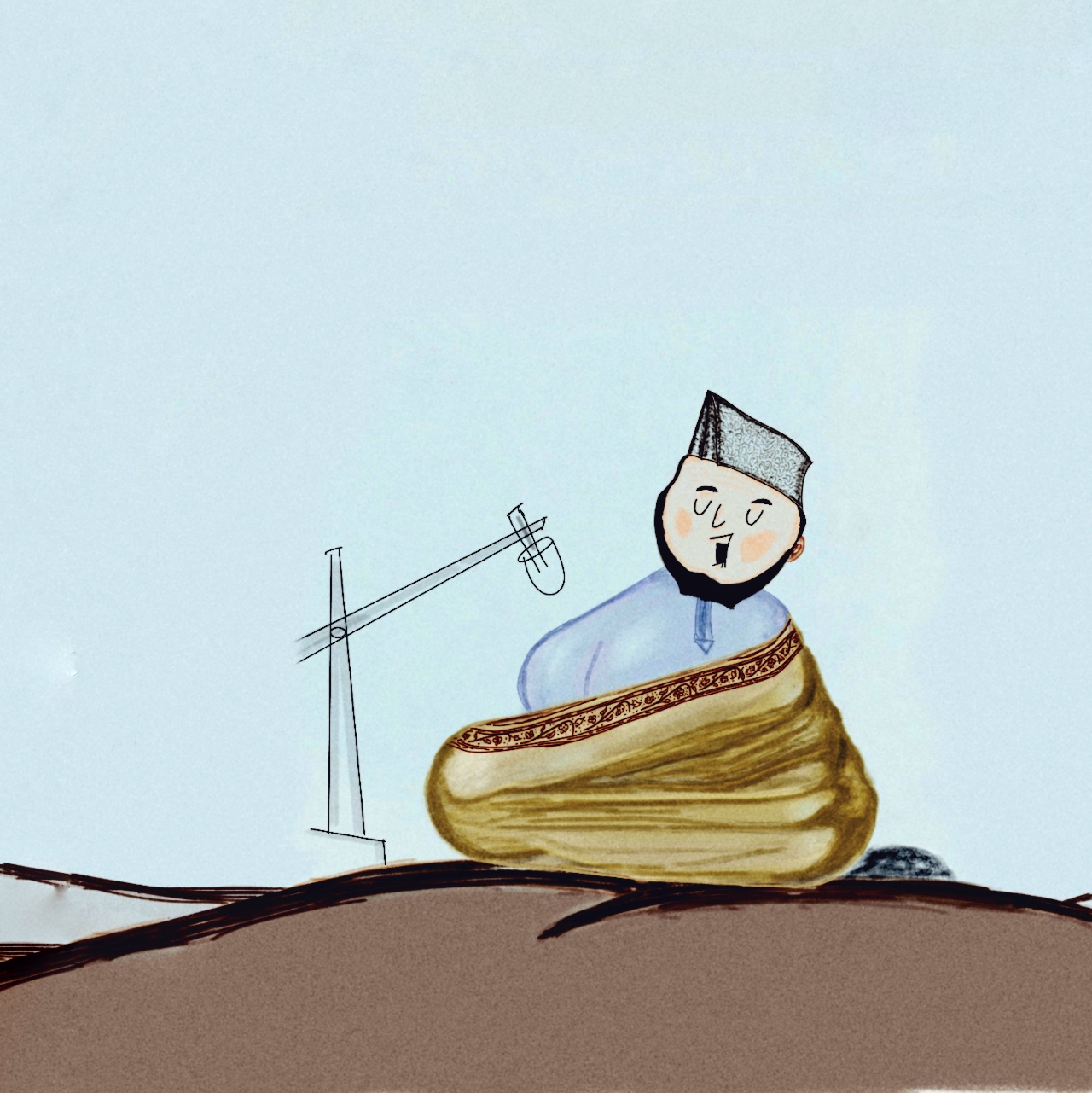
Question: Why does Dr Zakir naik's way of debates or recently Mufti Shamail Nadwi Sahab's debate with Javed Akhtar make me highly uncomfortable…that this is not the way even if temporarily it looks good. It's like apples and oranges are communicating.
Answer: There is a particular kind of discomfort that arises when one watches certain modern religious debates, especially those staged, as if as, public spectacles with cheering crowds, applause, mockery, and rhetorical traps. It is a discomfort that cannot always be articulated immediately, because on the surface the arguments may be correct, the opponent may appear cornered, and the audience may celebrate what looks like a victory for truth. Yet something within resists celebrating. This resistance is not weakness, nor confusion, nor an allergy to firmness. More often, it is the heart detecting a misalignment: a sense that something essential has gone wrong even if the outcome appears favorable.
To understand this unease, one must first recognize that modern debate, as a genre, is not designed to unveil truth but to reward winning. Its architecture is built for spectators, not seekers. The currency of such debates is not clarity but performance - soundbites, humiliation, crowd-laughter, forced binaries, and “gotcha” moments. Even when the content being defended is sound, the form itself pushes the nafs toward dominance, ego, and tribal satisfaction. The soul senses this distortion. What should have been an act of bearing witness to truth becomes a sport. This is why it can feel spiritually dirty: the heart knows the difference between dhikr of truth and entertainment disguised as righteousness.
In the Islamic tradition, adab is not an optional ornament added to knowledge after the fact. It is an integral part of knowledge itself. How one speaks, argues, corrects, and clarifies is not a matter of public relations but a moral reality with spiritual consequences. A person may defend Islam and still corrupt the inner state of both speaker and audience by feeding an addiction to mockery, aggression, and simplification. When truth is served in a vessel that poisons the soul, the soul recoils. That recoil is not a flaw; it is discernment. It is the inner self saying that haqq does not need cruelty, and certainty does not require spectacle.
Another source of discomfort lies in the absence of shared premises. Classical munāẓara functioned only when both sides agreed on basic foundations: the meaning of terms, the sources of authority, and the rules of reasoning. When one party rejects the very possibility of revelation as knowledge, what follows is rarely genuine refutation. Instead, the exchange collapses into rhetorical ping-pong. It may look like victory to an audience already convinced, but it produces little guidance and no real opening of hearts. Apples and oranges are not communicating; they are merely colliding.
The effect of such encounters on the viewer is often revealing. One simple diagnostic question can clarify everything: does watching this increase humility and clarity, or does it increase heat and contempt? If the residue left behind is inner agitation, smugness, or a taste for watching opponents be crushed, then the discomfort is not a problem to be solved but a signal to be honored. It is the soul refusing to let dīn be reduced to entertainment or factional triumphalism.
This does not mean Islam has no place for firmness or refutation. It certainly does, especially when confusion spreads and people are misled. But even then, the prophetic standard remains unwavering: firmness without vanity, clarity without cruelty, and purpose without spectacle. The goal is not to win an exchange but to guide a human being, or at least to protect others from confusion without corrupting their inner states in the process.
In an age intoxicated with events, clashes, and viral moments, it becomes even more important to recalibrate our priorities. Teaching is often superior to debating because it is slower, layered, and rooted in shared language. It builds rather than conquers. And when one does encounter public debates, the healthiest posture is not that of a fan but of a physician: extract the argument, discard the performance, and refuse to internalize the theatrics.
Above all, one must remember that public clashes do not build human beings; they build factions. Souls are not shaped by applause but by sustained exposure to Qur’an, seerah, and serious ‘ilm - spaces where truth is not shouted but embodied. If a form of engagement leaves the heart heavier rather than lighter, more contemptuous rather than more humble, then stepping back is not retreat. It is fidelity to the deeper aims of the dīn. The discomfort, then, is not a rejection of truth but a defense of it. It is the fitrah insisting that the light of guidance should illuminate, not scorch; invite, not entertain; and heal, not merely defeat.
Post Script
A deeper look at the debating styles associated with figures like Dr. Zakir Naik, and more recently the public exchange between Mufti Shamail Nadwi and Javed Akhtar, reveals why a sensitive soul may feel disturbed even while intellectually agreeing with much of what is being said. The agitation is not accidental; it emerges from a convergence of form, intention, and atmosphere that subtly disorients the moral and spiritual compass.
Dr. Zakir Naik’s debating style is highly modern, forensic, and prosecutorial. It is built on speed, memory, citation, and the rapid-fire deployment of texts to corner, overwhelm, and conclusively “close” the argument. This method is extremely effective in a media age trained by quiz shows, competitive examinations, and courtroom dramas. Yet precisely because of this effectiveness, it carries a hidden cost. Truth begins to resemble ammunition. Revelation becomes a tool of intellectual domination rather than an invitation to submission before God. The debate subtly shifts from What is true? to Who is exposed?
For many viewers, the soul recoils not from the content but from the spirit animating the exchange. There is little silence, little vulnerability, little sense of standing under truth rather than wielding it over another. The opponent is not encountered as a moral being in existential error but as an intellectual adversary to be neutralized. The crowd’s applause and laughter complete the transformation: the moment truth is celebrated because someone else has been humiliated, the heart senses contamination. Islam may be defended, but adab is quietly sidelined.
Another source of unease lies in the manner scripture itself is handled. The Qur’an, and even other sacred texts quoted in response, are often deployed as though they were lines from a novel or verses of poetry meant to impress through accumulation and speed. Ayāt are recited in rapid succession, stripped of silence, context, and inward trembling. Revelation, which in the Islamic tradition descends with gravity, law anzalnā hādhā al-Qur’āna ‘alā jabal, is reduced to verbal evidence in a cross-examination. The soul senses a category error: divine speech is being treated as rhetorical material rather than as a living address before which one stands in humility and fear.
This mode of citation risks a subtle desacralization. When verses are brandished to score points, when their power is measured by how effectively they corner an opponent, the Qur’an is no longer encountered as kalām Allāh but as intellectual property. There is an echo here of the Qur’anic warning against “selling the signs of God for a paltry price” - not necessarily money, but applause, validation, and the intoxicating certainty of victory. What should sanctify instead trivializes. God is not explicitly diminished, but He is functionally brought down into the arena of human cleverness and dominance. The transcendent is flattened into the forensic.
Closely tied to this is the absence of vulnerability - an absence that spiritually perceptive hearts find unsettling. Faith, when it is alive, always carries a degree of trembling. Even the prophets, who possessed certainty beyond all doubt, spoke with humility, grief, and prayer. In contrast, this debating posture radiates a confidence that appears to possess not only truth, but the entire truth, fully contained, fully mastered, immune to mystery. There is little sense that guidance itself is a mercy bestowed, not an asset owned. The arrogance does not necessarily manifest as pride in the speaker’s tone; it manifests as closure - nothing is left open, nothing remains unresolved, nothing invites further inward journey.
This is deeply alien to the Islamic epistemic tradition, where knowledge (‘ilm) is inseparable from awe (khashyah). The Qur’an does not praise those who merely know, but those who, knowing, fear God. When certainty is presented without trembling, when faith appears as a completed intellectual structure rather than an ongoing existential submission, the soul instinctively resists. It recognizes that something essential - dependence upon God, the fragility of the human knower, the ever-present possibility of misguidance - has been eclipsed. Authentic religious experience has always carried what theologians have called mysterium tremendum et fascinans: the overwhelming mystery, the trembling fear, and the irresistible attraction of the Divine. One stands drawn and undone at the same time - pulled toward God while acutely aware of one’s smallness before Him. This trembling mystery is central to faith; without it, religion collapses into ideology. In these debates, however, there is little that is mysterious, nothing that overwhelms, nothing that unsettles the ego in the presence of the Infinite. Everything is laid bare, flattened, rendered consumable. God is not encountered as Majestic and Near, but as a premise to be defended.
What replaces awe is stimulation. The experience becomes almost sensual - rhythmic, escalating, applause-driven - producing a kind of intellectual intoxication. The pleasure is not that of nearness to God, but of domination, exposure, and release. The crowd is not hushed into silence but aroused into excitement; not drawn into reverence but into climax. The soul senses this misdirection immediately. What should have evoked trembling before the Real instead produces something closer to spectacle-driven gratification. And faith, when it begins to feel orgasmic rather than awe-stricken, has already been displaced from its proper ontological register.
Finally, there is the problem of orientation. The entire structure of Dr. Naik's debates subtly reorients the believer away from God and toward the opponent. Attention is fixed on disproving, exposing, defeating. The believer’s emotional energy is invested not in gratitude for guidance but in satisfaction at another’s defeat. This shift is spiritually consequential. The Qur’an repeatedly warns against allowing hatred, rivalry, or triumphalism to corrupt justice and sincerity. When Islam is defended in a way that trains the heart to relish humiliation, however deserved it may appear, the soul senses that it is being trained wrongly.
Thus, the agitation does not arise because the arguments are false, but because the mode of truth-telling has been absorbed into a modern epistemology of power, spectacle, and domination. The sensitive soul feels that the Qur’an is being asked to perform in a theatre it was never meant to enter, and that faith is being presented not as a path of transformation but as an arsenal. Islam may emerge victorious on stage, but something quieter and more fragile, the interior state of reverence, walks away wounded.
The more recent exchange involving Mufti Shamail Nadwi and Javed Akhtar agitates the soul for some of the above reasons and for a different, though related, reason. Here the discomfort definitely does not arise from rapid citation, part of it does arise from verbal dominance, part of it arises from the staging of two radically incommensurable worldviews as if they were meeting on equal epistemic ground. One side speaks from within a framework where revelation, submission, and sacred order are intelligible realities. The other speaks from a civilizational posture shaped by skepticism, irony, and aesthetic rebellion against metaphysical constraint.
When such unequal premises are forced into a single arena called “debate,” something dishonest occurs, not necessarily in intention, but in structure. The exchange becomes theatre masquerading as dialogue. Each side performs for its own constituency, and the encounter generates heat without light. For the believing soul, the agitation comes from watching sacred concepts dragged into a space that does not recognize their sanctity, where irony is rewarded more than sincerity and cleverness more than truthfulness. Even when the religious representative speaks correctly, he is compelled to translate transcendent realities into a register designed for entertainment and provocation. The soul feels that something holy has been made to speak in a language that cannot carry its weight.
What agitates the soul most deeply in both cases is the same underlying phenomenon: the conversion of dīn into spectacle. When religion is forced to justify itself on the terms of modern media - speed, dominance, applause, viral moments - it may win arguments but lose something more subtle and precious. The Qur’an was not revealed as a debate manual, nor was the Prophet ﷺ sent as a debater seeking rhetorical victory. He was sent as a witness, a warner, and a mercy. His firmness never required mockery; his certainty never required spectacle. A soul aligned with fitrah senses this dissonance instinctively. It feels that truth is being handled without sufficient humility, that guidance is being confused with triumph, and that certainty is being performed rather than lived. The agitation, then, is not confusion but conscience. It is the heart’s refusal to let the light of revelation be refracted through the prism of ego, entertainment, and modern intellectual sport.
In that sense, the discomfort is itself a form of guidance. It reminds us that not every defense of truth is true to the spirit of Truth, and that the prophetic inheritance is not merely to be right, but to be rightly placed - in tone, in intention, and in effect on the human soul.