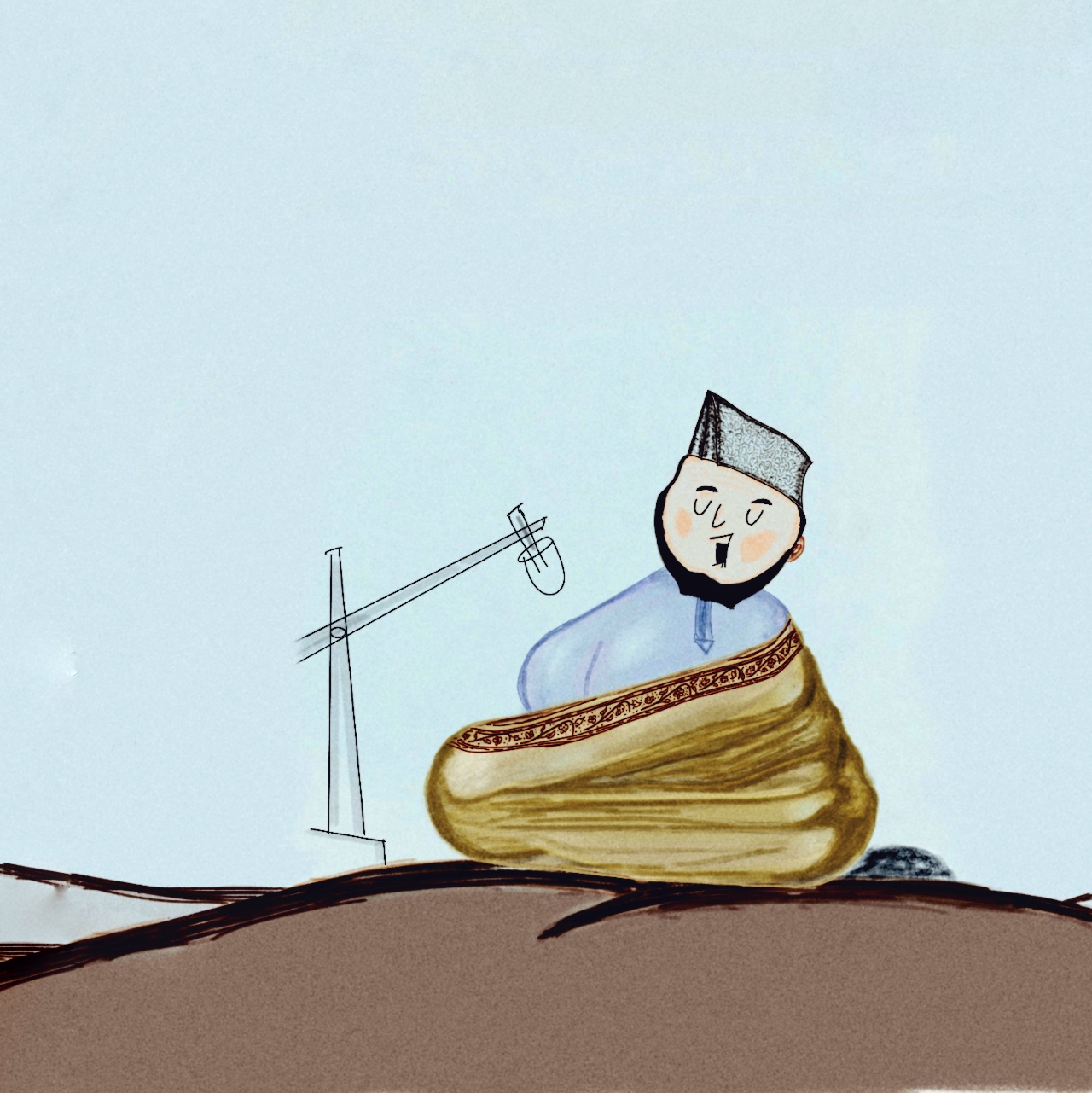
The human heart is capable of turning with equal intensity toward good and evil. A man may pray for something harmful with the same fervour with which he prays for what is beneficial, because the sincerity of a desire does not guarantee the truth of its object. The Qur'an describes man as supplicating for evil as he supplicates for good, and it immediately identifies the condition that makes this contradiction possible: man is hasty. He rushes toward conclusions before patience has allowed reality to disclose itself, mistaking the first appearance of a thing for its final meaning. He experiences an injury and immediately names it injustice; he receives affection and immediately names it sincerity. In this haste, the heart does not merely respond to reality; it begins to construct a reality suited to its own attachments.
Man has not been created ignorant of the distinction between good and evil. He has been shown the two highways, and the soul has been fashioned with the capacity to recognize both its wickedness and its righteousness. Its purification is success, while its burial beneath layers of falsehood is failure. Yet the capacity to recognize truth does not mean that every judgment we make is itself truthful. Between reality and our judgment stands the self, carrying its memories, injuries, loyalties, ambitions, fears, loves and previous investments. We do not encounter people as empty observers. We encounter them through what has already taken residence within us.
For this reason, the world outside us often begins to resemble the world within us. The suspicious man discovers conspiracies everywhere because suspicion has already become the form through which he receives the world. The vain man interprets disagreement as disrespect. The jealous man sees arrogance in another person's confidence. A loving mother sees innocence in behaviour that a stranger might call manipulation. A disciple interprets the severity of his teacher as wisdom, while an enemy interprets the same teacher's gentleness as cunning. The same act enters two hearts and becomes two different realities, and each heart leaves the encounter more certain of the judgment it carried into it, having used the event as material for constructing further evidence in its own defence.
Epictetus captured one dimension of this condition when he observed that human beings are disturbed not simply by things, but by the judgments they form concerning things. The event exists, but between the event and our response stands an interpretation, and that interpretation is rarely neutral. It is coloured by what we fear losing, what we hope to preserve and what we have already decided about ourselves and others.
The lower self is constantly making judgments, and these judgments move in two broad directions: attraction and aversion, praise and condemnation, affection and resentment. It says that a person is good or bad, sincere or deceitful, loving or hateful. Yet "good" and "bad" in this limited psychological sense should not be confused with objective righteousness and wickedness. They describe the directions in which the judging self leans. A favourable judgment is not sound merely because it discovers goodness, just as an unfavourable judgment is not sound merely because it detects evil. Either may happen to correspond with truth, but neither becomes truthful simply because it has arisen within us. The lower self may praise in order to protect an emotional investment, and it may condemn in order to protect a wound. It may idealize another because admitting his corruption would expose its own foolishness. It may demonize another because acknowledging his virtue would expose the injustice of its hatred.
The higher faculty within man stands above this polarity. It is not above morality, as though truth and falsehood were equal, nor is it beyond good and evil in the manner of those philosophies that seek emancipation from moral obligation. It is above our personal need to praise or condemn. It does not ask whether a verdict pleases us, confirms us or protects us. It asks whether the verdict is true. It stands above affection and resentment, but never above haqq and bāṭil.
Suppose a man decides that another person is good. From that moment onward, the person's actions begin to pass through the light of that original judgment. His silence becomes dignity. His anger becomes wounded sincerity. His absence becomes busyness. His harshness becomes honesty. His errors become exceptions, and his apologies become proof of humility. Even evidence against him is recruited in his defence. He behaved badly because he was under pressure. He lied because he was frightened. He ignored someone because he must have been struggling privately. He injured another person, but his intention, we assure ourselves, was surely pure.
There is nothing inherently wrong with interpreting others charitably. Ḥusn al-ẓann is a virtue when it remains disciplined by truth. But charitable judgment becomes corrupt when it ceases to protect the dignity of another person and begins instead to protect us from admitting that we misunderstood him. What appears outwardly as loyalty may inwardly be pride defending its own earlier verdict.
A respected teacher, for example, may be accused of humiliating a student. Those who already admire him immediately reinterpret the humiliation as discipline. Yet if another teacher behaved identically, they might call it cruelty. The standard has not remained constant because the individual has already been placed within the category of "good." The judgment precedes the evidence and then teaches the evidence how it must be understood.
A close friend may repeatedly betray confidences, yet each betrayal is excused because the original judgment—"she is loyal"—has become entangled with our own identity. To acknowledge her disloyalty would require us to acknowledge our failure to judge her correctly. The mind therefore labours not to discover the truth about the friend, but to preserve the truthfulness of its own self-image. The person is gradually denied the freedom to appear before us as a complicated human being. He must remain the saint we created, because too much of our own judgment has been invested in his sainthood.
Modern psychology calls a related process motivated reasoning. Human beings do not always reason impartially toward truth. Their motivations affect which memories they retrieve, which evidence they notice, which explanations they construct and which conclusions they find emotionally acceptable. Reason becomes an advocate employed by attachment. Thus even a favourable judgment may become a prison, though its walls are built from praise rather than blame.
The same process unfolds in the opposite direction when we decide that someone is bad. His silence becomes arrogance. His anger becomes proof of his hidden nature. His absence becomes avoidance. His kindness becomes manipulation. His apology becomes theatre. His success becomes evidence of corruption, while his failure becomes evidence of incompetence. Even his good deeds are converted into evidence against him. He gives charity only to be seen. He speaks gently because he wants something. He admits his mistake because he has no other choice. He becomes religious because he desires social respect.
Hatred possesses a terrifying interpretive intelligence. It can explain everything while being corrected by nothing. Once a man has judged his colleague proud, every possible behaviour confirms the verdict. If the colleague speaks, he is showing off. If he remains silent, he is condescending. If he agrees, he is pretending. If he disagrees, he is exposing his arrogance. The judgment becomes self-sealing. No evidence can enter from the outside because every piece of evidence is forced to serve the conclusion already established within.
Families often suffer under such judgments. Once a daughter-in-law has been labelled manipulative, her service becomes strategy and her exhaustion becomes drama. Once a husband has been judged uncaring, even his attempts to repair the relationship become temporary tactics. Once a child is called irresponsible, every failure confirms the label while every success is dismissed as luck. The lower self does not merely collect facts. It assigns meanings to facts, and it distributes those meanings according to its prior love or hatred.
Once the lower self has invested deeply in a judgment, correction becomes almost impossible from within the same level of consciousness. The judge, the advocate and the interested party have become one person. The self that pronounced the verdict now selects the evidence. It calls witnesses favourable to itself, dismisses contrary testimony and resolves every ambiguity in its own favour, maintaining the appearance of inquiry while having already decided the outcome. The favourable self searches for more reasons to love, and the unfavourable self for more reasons to hate, but both fear the same humiliation: the possibility that they were wrong.
The longer a judgment has been held, the greater the cost of surrendering it. If a person has defended someone for ten years, admitting that person's corruption also means admitting that his own defence was mistaken. If he has hated someone for ten years, acknowledging that person's goodness means confronting the injustice of a decade of hatred. We therefore protect not only judgments, but the years invested in them.
The same mechanism operates on a larger scale in politics, sectarian conflict, ideological movements and family feuds. A man may defend wrongdoing committed by his own group because condemning it would threaten his belonging. He may condemn the identical act when committed by an opposing group because no such emotional cost exists. His supposed moral principles move according to the identity of the offender. The lower self does not honestly ask, "What happened?" It asks, "How can what happened be made to support what I already believe?"
Correction begins only when another faculty awakens. This is what may be called the higher self: the witness within the witness, the dimension of man capable of standing at a distance from his own loves and hatreds and interrogating them. In Islamic spiritual language, it is associated with the awakening heart, the moral intellect and the self-reproaching soul—the nafs that refuses to leave man entirely comfortable with his own falsehood. The Qur'an solemnly swears by this self-reproaching soul because its reproach is a mercy. It is the wound through which truth re-enters a conscience that has begun to close.
The higher self does not always begin by announcing a new verdict. It begins with a question. What if I have been unfair? What if I excused in my friend what I condemned in my enemy? What if what I called love was attachment to my own image of him? What if what I called moral clarity was merely injured pride? What if his apology was sincere? What if her silence was pain rather than arrogance?
This question is the beginning of freedom. The lower self says, "I have already decided." The higher self replies, "Then decide again."
Philosophers have long recognized that man is not internally flat. Plato spoke of rational, spirited and appetitive dimensions within the soul, each pulling the human person in a different direction. Islamic thought does not simply reproduce Platonic psychology, yet the observation remains useful: man can desire one thing, defend another and know a third. Imam al-Ghazālī compared the heart to a king and the human faculties to armies and servants. When the king governs properly, appetite and anger are disciplined and the kingdom becomes ordered. When the king is captured by appetite or rage, the very faculties meant to serve man begin to rule him, and intelligence, imagination and memory are conscripted into the service of desire. The higher self is therefore not merely one more opinion competing within us. It is the faculty demanding that opinion itself submit to truth.
When the higher self contradicts the lower self, dissonance begins. The lower self says, "He is evil." The higher self asks, "Was the act truly evil, or did it merely injure you?" The lower self says, "She is perfect." The higher self asks, "Why then do you excuse in her what you would never excuse in another?" The lower self says, "My judgment was just." The higher self asks, "Would you have judged identically had the person been someone you loved?"
This conflict produces pain. A person becomes agitated, defensive and restless. He repeats arguments without being asked. He searches obsessively for fresh evidence. He recruits friends to confirm his view. Neutral questions anger him because they strengthen the voice he is trying to suppress. His defensiveness is not always the strength of certainty. It may be the panic of a judgment that senses its throne beginning to shake.
The Prophet ﷺ described wrongdoing as that which wavers or rankles within the soul and which one dislikes being exposed before people. This does not mean that every feeling of unease is infallible. The anxious person may feel guilt where there is none, and the corrupt person may feel no guilt where there is much. Yet the Prophetic teaching recognizes a profound moral reality: the soul may know what the tongue is still attempting to deny. Modern psychology describes cognitive dissonance as the discomfort produced by inconsistency between beliefs, behaviour and evidence. A person may resolve this discomfort by correcting his belief, but he may also rationalize, reinterpret or reject the disturbing evidence. Saint Augustine wrote of a divided will struggling against itself. The human being can know, desire and resist at the same time. The conflict does not mean that two separate beings inhabit him. It means that one soul is divided by incompatible allegiances. The pain of dissonance is therefore not meaningless. It may be the pain of falsehood being displaced.
Yet once questioned, the lower self does not quietly surrender. It calls for reinforcements. It revisits old memories and edits them. Under the power of hatred, it remembers every offence and forgets every kindness. Under the power of idealization, it remembers every kindness and erases every offence. It narrates the story selectively, omits whatever weakens its case, and asks questions whose answers have already been decided. "Do you not also think he is arrogant?" "Surely you agree she could never do such a thing?" It does not seek counsel. It seeks witnesses for the defence.
The more threatened it feels, the more evidence it gathers. Yet the quantity of evidence does not guarantee truth when the mechanism selecting the evidence has been corrupted. A man may possess a hundred reasons for hating another person, while all one hundred are interpretations generated by the first hatred. Another may possess a hundred reasons for loving someone, while all one hundred are children of the first idealization. The original judgment becomes a seed. The self grows a forest around it and then points to the forest as proof that the seed was true.
This internal war cannot continue forever. The soul seeks unity. It desires that its conflicting voices become one. Yet the conflict can end in two radically different ways.
The first resolution is correction. The lower self accepts the judgment of the higher faculty and admits: I judged too quickly. I mistook my wound for moral insight. I defended him because admitting the truth would have injured my pride. I condemned her because hatred had made her goodness invisible.
Such an admission is painful because something must die. What dies is not the higher faculty, but the false image maintained by the lower one. The person may have to apologize, withdraw an accusation, return a right, revise a friendship or admit that someone he admired is not what he imagined him to be. Truth may require love to become sober or hatred to become just.
When this correction occurs, judgment, conscience and reality begin to correspond. This is genuine peace. It is not merely the disappearance of emotional discomfort, but the tranquillity that follows surrender to truth. The Qur'an speaks of the nafs al-muṭmaʾinnah, the tranquil soul, which returns to its Lord pleased and pleasing. Its tranquillity is not produced by avoiding correction, but by becoming properly ordered beneath remembrance, obedience and truth. The person no longer wastes his inward energy defending what he secretly knows to be false.
The second resolution is darker. Instead of correcting the lower self, a man may repeatedly suppress the higher faculty until its voice becomes faint. He mocks his conscience, avoids honest companions, reinterprets every warning and surrounds himself with those who confirm his existing judgment. To speak of "killing the higher self" does not mean that this faculty is metaphysically annihilated. It means that it is functionally buried. The capacity remains within man's created nature, but he has trained himself neither to hear nor obey it.
The Qur'an speaks of deeds producing rust upon the heart. Repetition changes the instrument by which reality is perceived. The first injustice disturbs the soul. The tenth requires elaborate explanation. The hundredth begins to feel natural. What was once experienced as corruption becomes habit, and habit eventually disguises itself as character.
This too produces a kind of peace, but it is the peace of numbness. The liar eventually stops trembling. The cruel person eventually sleeps well. The partisan no longer notices contradiction. The arrogant man no longer hears correction. The conscience that once protested has been starved through repeated neglect. The war ends because one side has been suffocated. This is not sakīnah. It is moral unconsciousness.
When the higher faculty has been silenced, man does not cease to function. He may work, eat, marry, accumulate wealth, seek pleasure, protect his group and avoid danger. He may become socially successful and intellectually impressive. Yet none of these capacities alone raises him beyond animal existence. Animals also experience attraction and aversion. They recognize threat, seek comfort, defend territory and establish hierarchies. What elevates man beyond appetite and reaction is his answerability to truth: his ability to judge his own judgment, restrain his own interest and surrender what he desires before what he knows to be right. The higher faculty makes man capable of saying, "I love him, but he was wrong. I dislike her, but she is innocent. This benefits me, but it is unjust. This humiliates me, but it is true." Without this faculty, intelligence becomes merely a sophisticated servant of appetite. Reason no longer judges desire. It invents arguments for whatever desire has already chosen. Man remains clever, but ceases to be wise.
The triumph of the higher self requires faith, but not the brittle religiosity of a hardened ego. It requires the strength to survive the collapse of one's own judgment. A hard heart cannot admit error because it experiences correction as annihilation. A soft heart can yield without breaking. It can say, "I was wrong," because its identity is not rooted in infallibility, social honour or intellectual superiority. Its identity is rooted in servitude to Allah. Hard conviction within a hard heart becomes fanaticism. Hard conviction within a soft heart becomes faith.
Prayer, fasting, remembrance, silence, righteous companionship and self-examination are therefore not marginal rituals. They are disciplines through which the tyranny of haste, appetite and ego is weakened. They create the inward stillness in which the questions of conscience can finally be heard. Sabr gives reality time to disclose itself. Dhikr loosens the grip of the self upon its preferred images. Ṣuḥbah places man among those who may correct him before his errors become permanent structures of perception.
Love itself may purify, but only when love accepts correction by truth. Otherwise, love becomes another form of blindness. True love does not require us to call evil good. It requires us to desire the good of the beloved, even when this means seeing him without illusion. True forgiveness does not require the denial of injury. It requires that injury not become the permanent ruler of perception.
The purpose is not to stop judging. Human life makes judgment unavoidable. We must distinguish sincerity from deceit, justice from oppression and truth from falsehood. The purpose is to prevent judgment from becoming an idol that must be worshipped merely because we once pronounced it. Man must judge, and then remain capable of judging his judgment—asking whether love has blinded him, whether hatred has poisoned him, whether memory has been edited, and whether certainty is truly knowledge or merely the weight of long investment. This capacity is among the highest signs of inward life.
Peace descends only when what we love, what we say, what we judge and what is true are brought into a single direction. This harmony is not achieved by silencing conscience, but by purifying the soul until it no longer experiences truth as an enemy. It is achieved when the heart becomes soft before Allah, severe against its own deception and patient enough to allow reality to reveal what haste concealed.
The purification of judgment is therefore part of the purification of the soul itself. A civilization that cannot judge its own judgments becomes captive to propaganda, faction, inherited resentment and collective self-deception. Its intelligence remains active, but its moral intellect dies. The revival of the religious sciences must therefore include a revival of inward discernment: the discipline by which man examines not only the world before him, but the instrument within him through which that world is seen. For the final struggle is not merely between one opinion and another. It is between a self that wishes to possess truth and a heart willing to be possessed by it.